AI, tools, experiments
I am deeply interested in AI and what it changes about chess, learning, preparation, and thinking. I build and ship my own tools — two apps are live right now.
Live apps
01 · Built & shipped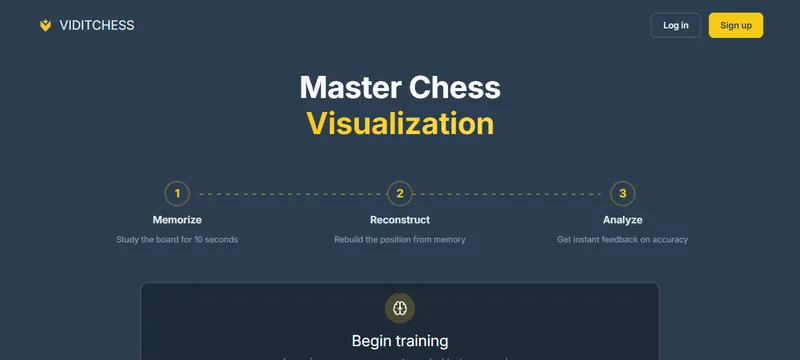
Memory
Learn to see the board without looking at it.
A web app for training blindfold chess — the skill of holding a position in your head instead of on the board. It's how grandmasters calculate, turned into practice anyone can do.
memory.viditchess.com →
Tactics
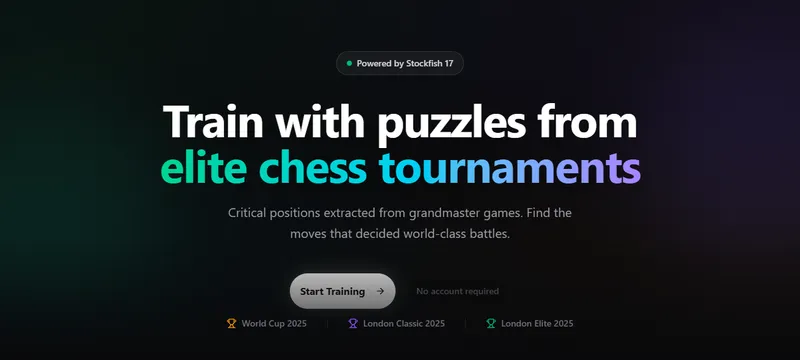
Solve puzzles from real tournament games.
A puzzle-solving app built from real tournament positions — current sets come from 2025 events like the World Cup and the London Classic. Fresh puzzles from games that actually happened, not a random database.
tactics.viditchess.com →
Human chess intelligence
Not just the engine move. The human move.
An experiment exploring whether AI could predict what a grandmaster is likely to play, instead of only showing the engine's best move. That difference matters for broadcasts, learning, and understanding practical chess.
See the demo on X →
Learning by building
AI is easier to understand when you make things with it.
I keep building small tools, testing agent workflows, and exploring how AI can help with chess, training, content, and everyday thinking. More apps are on the way.
Experiments first · Products later
Why AI?
02Chess players have lived with superhuman AI for decades. Engines changed how we prepare, how we evaluate truth, and how we argue with our own instincts. That gives chess players a strange advantage: we know what it feels like when machines become better than us at something we love.
I am interested in that edge. Not AI as a buzzword, but AI as a practical tool for thinking, learning, explaining, and building things that would have been impossible a few years ago.